
Total Redditor Death
Homo Economicus, Part VI: David Fincher’s ‘The Killer’ (2023)


“In the meantime, ‘Do what thou wilt shall be the whole of the law,’ to quote… someone, can’t remember who.”
David Fincher’s The Killer is a subtle movie, at least it is for American audiences today. The general dumbing down of the population is one of the factors that feeds into the vicious cycle of Hollywood producing complete slop.12 But every now and then, we get a gem. The movie did not have much of an impact, and it has disappeared from relevance, as have most of the movies I have covered in this series. I think the reason for this is simple: the message hits too close to home.
The film, on its surface, is a clear satire of the endless hitman genre, but there is more Fincher is going for here. The movie opens with us meeting our Killer protagonist (played by Michael Fassbender) and his internal monologue that we are privy to. The thoughts of The Killer are a combination of boilerplate Philosophy 101 from college, basic bitch Reddit atheism, and false self-deprecation, making our protagonist look like even more of a douchebag than he already appears. You’d have a hard time convincing me that Fincher, along with veteran screenwriter Andrew Kevin Walker, didn’t know what they were doing here.3 A clue to this meta-perspective is the quote that begins this article. Our pretentious protagonist happens to forget that this line was uttered by a most infamous occult practitioner and MI6 operative, Aleister Crowley.456
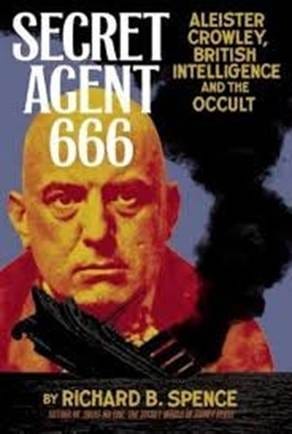
Around 1920, Crowley moved to Sicily where he founded the Thelema Abbey, a site that quickly became known for conducting satanic rites — complete with animal sacrifices, bestiality, and blood drinking. The abbey also gained notoriety for being fraught with death and disease. Crowley’s own infant child died there, as did others. At the time, Crowley was openly accused of infanticide, and he never denied the charges. To the contrary, Crowley openly and rather flamboyantly reveled in his depravity. In Diary of a Dope Fiend (Crowley was a life-long abuser of drugs of all types), he wrote that: “I have driven myself to delight in dirty and disgusting debauches, and to devour human excrement and human flesh.”
Those close to Crowley had the rather disturbing habit of dropping dead under unusual circumstances. As Gary Valentine Lachman has written, “A study of Crowley’s life and that of his disciples shows that many of them ended up mad, destitute, or prematurely dead; occasionally all three.” From early in his life, Crowley developed an unsavory reputation for killing his mountain climbing partners, a number of whom failed to make it home from their joint expeditions. In his native England, he was widely rumored to routinely sacrifice children and dump their mutilated remains in the Thames River.7
The reason, in my opinion, that The Beast 666’s name is not uttered in The Killer is that it’s the same dictum the audience lives by; revealing Aleister’s name would just be too on the nose, especially within the opening minutes of the film. The Killer, whose real name is never revealed, continues to badger us with quips and factoids about how meaningless life is. This exposition sets the stage for the rest of the film, which is The Killer violating every aspect of his worldview and also the audience’s. This is the reason why the average Redditor can’t seem to get the movie. Because the last thing the Redditor or average American wants to do is look in the mirror.8
“If I’m effective, it’s because of one simple fact: I… don’t… give… a… fuck.”
The blanket statement is absurd on its face; it’s something that sounds badass to a 40-year-old who still lives in his parent’s basement but is cringe when given 30 seconds of real thought. The Killer is in fact killing, so why even do that? If everything is so meaningless, why take any action at all? If life along with everything in it is so pointless, why are you still alive? The only real answer to this, if a person believes it, is cowardice. The same holes in the materialist worldview are exposed in my previous article reviewing Michael Mann’s Collateral (2004).9
“Stick to your plan. Anticipate; don’t improvise. Trust no one. Never yield an advantage. Fight only the battle you’re paid to fight. Forbid empathy. Empathy is weakness. Weakness is vulnerability. Each and every step of the way, ask yourself, ‘What’s in it for me?’”
Because of the unrelenting impetus of the Enlightenment’s war against transcendence and metaphysics, it resulted in the collapse of meaning and truth as such. Thus was the bastard child known as Critical Theory birthed: any boundary or restriction is patriarchal, authoritarian, illiberal, and therefore “Fascist.” For hundreds of years, the best Enlightenment thinkers yearned to prove Man’s intellect to be the only god there was, the only deity worth serving, the only thing that could discover truth and certitude. Its result was its own demise in Post-Modernism: there is no objective truth, reason, or narratives. Thus, only a void is left and a vacuum for power. The ouroboros eats itself without the transcendent to give it purpose, meaning, structure, and salvation.
It was concluded, at the instigation of Max Horkheimer, who became the Institute’s director in 1930, that a subtle revolution must be made through the penetration and transformation of the cultural traditions and institutions of Western civilization. At this time the music critic Theodor Adorno and the psychologists Erich Fromm and Wilhelm Reich joined the Frankfurt School. In 1933, members of this largely Jewish group emigrated en masse to the U.S., following Hitler’s rise to power. With them came the future guru of the New Left, Herbert Marcuse, then a graduate student. They were assisted by Columbia University to reorganize the Frankfurt School as the Institute of Social Research in New York City.
One of the principal weapons developed by the Frankfurt School is “Critical Theory,” which involves the destructive analysis of the principles of Western civilization including religion, family, morality, tradition, and nationalism. One of the Frankfurt School’s most influential publications is Adorno’s The Authoritarian Personality, which indicts the “patriarchal family” as the seedbed of “fascism,” supposedly because of the inherent authoritarianism of the father figure. Hence, fascist–authoritarian traits are culturally inherited. Others from the Frankfurt School who synthesized Freudian theories on sexual repression with Marxian economics, such as Erich Fromm, Herbert Marcuse, and Wilhelm Reich, propagated widely the theory that “sexual repression” is a product of capitalist society and that “sexual liberation” would precede a social revolution.10
When basic understandings and boundaries are uprooted, the logical conclusion is that there is no use for them altogether, so they must be destroyed. Why allow them to exist? They might rise again to form the most terrible thing imaginable: a boundary to degeneracy. Post-Modernism is the continuation of the Critical Theory project.
The post-industrial “intellectual class” (a concept Irving Kristol developed into the “New Class”) does not promote socialism, but economic redistribution and something more corrosive than socialism — nihilism. The New Class — which defines modern liberalism — dominates the most influential spheres of modern society. They utterly control higher education and thrive in the burgeoning public sector, wielding as their tools the now-familiar goals of affirmative action, environmentalism, diversity, feminism, social justice, multi-culturalism, gay rights, “reproductive freedom,” and other euphemistic causes du jour. All of these movements share a common objective: undermining the bourgeois social order created by capitalism and replacing it with a secular welfare state (and libertine culture).11
The Killer is a nihilist — at least he LARPs that he is — and then he bumps up against reality. His work mistake leads to a reckoning; he proceeds to break every rule of the code he lived by because he is not a nihilist, and it is impossible to live this way, as we see for the last hour and a half of the movie. The Killer has attachments, people he cares about and possibly even loves. He’s willing to risk everything to make sure that they are protected and unharmed, including laying down his life if necessary. This is the antithesis of how a nihilist would act. An amazing thing happens once we get to this part of the movie: we as the audience can start to like and care about The Killer. Why? Because there is something to admire once we realize he cares and loves someone. Why would anyone care about someone who cares about nothing? The Killer’s mistake is the MacGuffin of the movie; there would be no movie without it. Similarly, for ourselves, often mistakes and hardships serve as the MacGuffin of our lives. Pain and anguish can provide a sign to us that life is worth living and, more importantly, that the ones we love and care about are worth dying for. Fr. Seraphim Rose writes:
“What is truth?” That question may — and must — be framed from an entirely different point of view. The skeptic Pilate asked the question, though not in earnest; ironically for him, he asked it of the Truth Himself. “I am the Way, the Truth, and the Life: no man cometh unto the Father, but by Me.” “Ye shall know the Truth, and the Truth shall make you free.” Truth in this sense, Truth that confers eternal life and freedom, cannot be attained by any human means; it can only be revealed from above by One Who has the power to do so.12
Also by Payload:
“Multiculturalism Is a Pipedream”: A Review of Sidney Lumet’s Q&A (1990)
“Calling Darwin’s Bluff”: A Review of Michael Mann’s Collateral (2004)
“Requiem for the Enlightenment” — Homo Economicus, Part I: Andrew Dominik’s Killing Them Softly (2012)
“The Ego, The Enemy” — Homo Economicus, Part II: J.C. Chandor’s A Most Violent Year (2014)
“Sins of the Father” — Homo Economicus, Part III: Sidney Lumet’s Before the Devil Knows You’re Dead (2007)
“The Best-Laid Plans” — Homo Economicus, Part IV: Michael Mann’s Thief (1981)
“Lurking Under the Surface” — Homo Economicus, Part V: Paul Brickman’s Risky Business (1983)
Fayner Brack, “Book Summary: ‘Dumbing Us Down — The Hidden Curriculum of Compulsory Schooling’ by John Taylor Gatto,” Medium.com, May 8, 2023.
Echo Chamberlain, “The Era of Slop Entertainment,” March 31, 2025.
Cinedome, “He’s the most demanding director in the history of Hollywood,” uploaded September 18, 2024.
“Historian Reveals the Double Life of ‘The Great Beast 666,’” University of Idaho, June 17, 2008.
Richard Spence, “Was Aleister Crowley a Secret Agent?” Dazed & Confused, July 17, 2008.
Jay Dyer, “Aleister Crowley - Secret Agent 666 & Shambhala - Jay Dyer & Dr. Richard Spence (Half),” uploaded May 19, 2016.
Dave McGowan, Programmed to Kill: The Politics of Serial Murder (iUniverse, Inc., 2004), 123.
Captain_Rex_501, “‘The Killer’ (2023): A New and Somewhat Atypical Fincher Thriller,” Reddit; Joseph D’Andrea, “The Killer (2023),” Fifth Draft Film, November 14, 2023.
Payload, “Calling Darwin’s Bluff,” Old Glory Club, July 11, 2025.
Kerry Bolton, Revolution from Above (Arktos Media, 2011), 102–3.
Mark Pulliam, “Post-Modern Creative Destruction,” Law & Liberty, July 3, 2015.
Fr. Seraphim Rose, Nihilism: The Root of the Revolution of the Modern Age (St. Herman Press, 1994), 10.
 | A guest post by
|